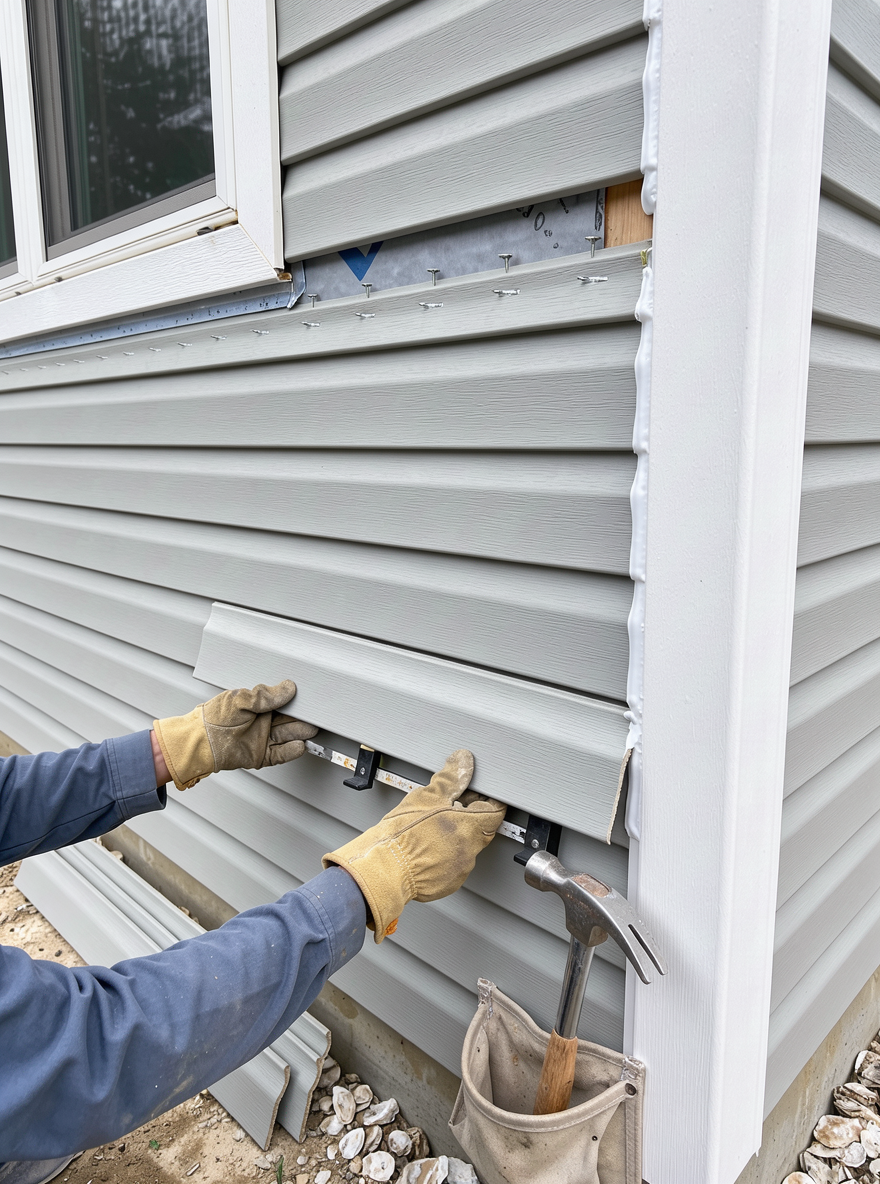
Siding installation in Hampton Roads is a different job than it is a few hours inland. Homes in Sandbridge, the Oceanfront and Great Neck face salt-laden air, wind-driven rain and nor'easters that push water sideways into every seam. Homes farther in, in Kempsville, Princess Anne or Chesapeake, still deal with long, humid summers that keep wall cavities damp. A well-planned installation accounts for all of it. That means choosing a panel rated for local wind exposure, using corrosion-resistant fasteners such as stainless or hot-dipped galvanized nails near the water, and detailing every window, door and penetration so water that gets behind the cladding has a way to drain out.
Material choice drives most of the long-term result. Vinyl is the most common choice across Virginia Beach and Norfolk subdivisions. It is affordable, it doesn't rot, and thicker premium panels hold up better in high wind. Insulated vinyl adds a rigid foam backer that stiffens the panel and can help with energy use. Fiber cement resists fire, insects and warping and holds paint well. It is heavier, though, and needs careful cutting, sealed ends and proper clearances from roofs and ground. Board and batten and mixed-material looks are popular on newer builds and renovations. A local siding pro can walk you through how each material performs on your exposure, from a breezy Bayside lot to a shaded yard in Thoroughgood.
The layer behind the siding matters as much as the panels. A proper weather-resistant barrier or house wrap should be lapped shingle-style, taped at seams and integrated with flashing at windows, doors and roof-to-wall joints. Kickout flashing should go wherever a roof edge meets a wall. In this humid coastal climate, trapped moisture is the usual culprit behind rotted sheathing, mold and peeling interior paint. Signs your current siding is failing include panels that are loose, buckled or rattling in wind, soft or stained sheathing at the bottom courses, bubbling or swelling, gaps around trim, rising cooling bills and water stains inside exterior walls.
Before any work starts, check permit requirements with your city's permit office. That could be Virginia Beach, Norfolk, Chesapeake, Suffolk, Portsmouth, Hampton or Newport News. Rules can differ for full re-siding, structural sheathing repairs and properties in certain coastal or historic areas, and some HOAs set their own color and material rules. Ask any contractor you're matched with who pulls the permit, how they handle rotted sheathing found after tear-off, and what fasteners and flashing they plan to use.
Vinyl vs Fiber Cement in Hampton Roads
Vinyl usually costs less up front and needs very little upkeep. Choose a thicker gauge and a wind-rated product if you live near the Oceanfront or Sandbridge. Fiber cement costs more and takes more labor to install. It gives a more substantial, paintable finish, resists impact and won't melt from reflected sunlight. It needs repainting over time, and its cut edges must be sealed against moisture. Plenty of homeowners mix the two, using fiber cement on the front elevation and vinyl elsewhere.
Seasonal Timing Tips
Spring and fall are the most comfortable seasons for installation here. Late summer brings hurricane-season scheduling pressure, and storms push demand up after they pass. Vinyl expands and contracts with temperature, so experienced installers adjust nailing and gaps for the conditions on install day. If your siding is clearly failing, try to book an estimate before peak storm season rather than after a damage event.
Technician insight
In Virginia Beach, the thing that catches most people out with Siding Installation is what's hiding under the old siding. Many homes in Kempsville, Bayside and Thoroughgood have decades-old cladding over sheathing that has quietly soaked up humid coastal air and wind-driven rain. Homeowners budget for panels and forget the wall underneath. Ask every contractor how they price rotted sheathing before tear-off. If you're near the Oceanfront or Sandbridge, also ask about corrosion-resistant fasteners, because standard nails rust out in the salt air.
Re-Siding a Breezy Lot Near Sandbridge
A homeowner near Sandbridge kept finding vinyl panels loose or blown off after every strong storm. The contractor they were matched with found thin builder-grade panels, nails that had rusted in the salt air and no kickout flashing where the roof met the wall, which had softened the sheathing below. The contractor replaced the damaged sheathing and added taped house wrap and flashing. They then installed thicker wind-rated vinyl with corrosion-resistant fasteners. The new siding has stayed tight through later storms with no new water staining.
Siding Installation Services We Offer
✓New Siding Installation
Complete siding installation on homes and additions, including the weather barrier, flashing and trim. A contractor plans the layout and material around your home's wind and sun exposure.
✓Vinyl Siding Installation
Standard and premium-thickness vinyl panels in lap, Dutch lap and shake profiles. Wind-rated options suit exposed coastal lots.
✓Fiber Cement Siding Installation
Durable, paintable fiber cement lap, panel and shingle siding. Installers seal the edges and leave proper clearances for the humid coastal climate.
✓Insulated Siding Installation
Vinyl siding with a foam backer that stiffens the panels and adds a layer of insulation over the wall.
✓Board and Batten Siding
Vertical board and batten in vinyl or fiber cement, often used on gables, accent walls or the whole house for a farmhouse look.
✓House Wrap and Moisture Barrier
Installation of a weather-resistant barrier with taped seams and integrated flashing. This layer controls moisture behind the siding in Hampton Roads humidity.
✓Trim, Soffit and Fascia During Installation
Replacement or wrapping of trim, soffit and fascia at the same time as the siding, giving a sealed, finished exterior and proper attic ventilation.
Siding Installation Cost in Virginia
| Service | Typical Range | What Affects It |
|---|---|---|
| Vinyl siding installation (installed) | Typically $5–$11 per sq ft | Typical market range that varies by contractor. Panel thickness, tear-off, trim and home height move the price. Final pricing comes from the contractor's estimate. |
| Insulated vinyl siding (installed) | Typically $7–$14 per sq ft | Typical market range. Foam-backer thickness and wall prep affect cost. Your contractor's estimate sets the actual price. |
| Fiber cement siding (installed) | Typically $9–$16 per sq ft | Typical market range. Product line, factory-primed or prefinished boards, painting and labor intensity drive cost. The final figure comes from the contractor. |
| Full-house siding, average single-family home | Typically $12,000–$35,000+ | Broad typical range for vinyl through fiber cement. Size, stories, tear-off and sheathing repairs vary widely. Get a written estimate. |
| Sheathing replacement found during tear-off | Typically $3–$7 per sq ft | Typical market range for replacing rotted sheathing. The extent is often unknown until the old siding comes off, so ask how the contractor prices it. |
Ranges are typical for Virginia and confirmed with an exact written quote before any work starts.
How it works
- 1
Tell Us About Your Project
Share your city, your home's approximate size, your current siding and the material you're considering. We use those details to match you with independent local siding contractors.
- 2
Get Matched With a Local Siding Pro
We connect you with an independent contractor who serves your area, whether that's Virginia Beach, Norfolk, Chesapeake or elsewhere in Hampton Roads. You talk with them directly.
- 3
On-Site Assessment and Estimate
The contractor measures your home, checks the existing siding and sheathing for damage, and reviews your material options. They then give you a written estimate.
- 4
Compare and Decide
Review the scope, materials, fasteners, permit handling and timeline. You choose whether to move forward. There is no obligation.
Pricing
Siding installation is usually priced per square (100 sq ft) or per square foot of wall area. The main factors are material, tear-off, sheathing repairs, trim complexity and the number of stories. Every price comes from the independent contractor's written estimate, and the ranges below are general market figures, not quotes.