2026-10-03 ·
Repair or Replace Siding? A Hampton Roads Homeowner's Guide
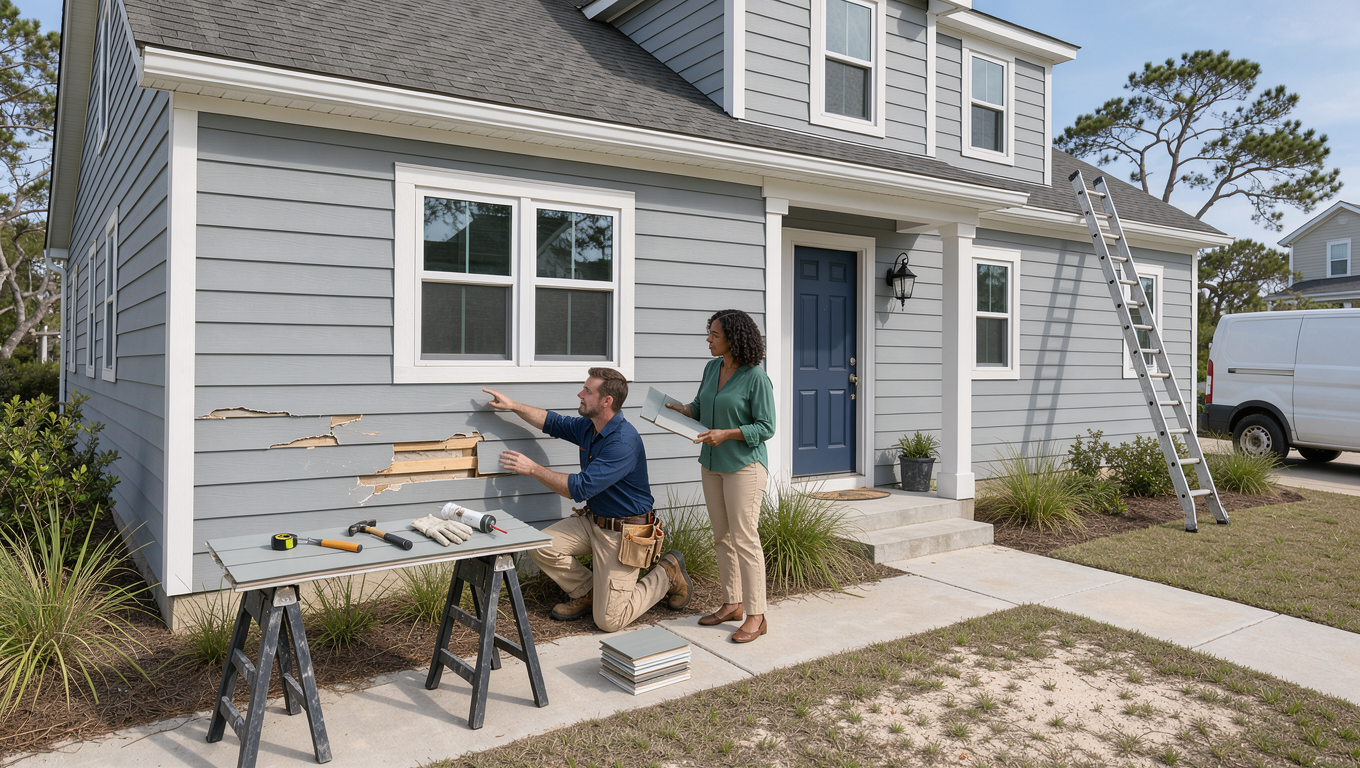
The short answer: repair your siding when the damage is isolated (a few cracked or storm-loosened panels, a dented section, one failed corner) covering less than roughly 20–30% of a wall, and the sheathing underneath is dry and solid. Replace it when damage is widespread, the material is near the end of its life (often 20–40 years for vinyl depending on quality and exposure), matching panels are no longer available, or water has gotten behind the cladding. In Hampton Roads that last point matters more than almost anywhere else. Coastal humidity and wind-driven Atlantic rain can rot sheathing quietly for years, so the real decision often depends on what is behind the siding, not what you see on the surface.
Why Hampton Roads Homes Face This Decision Differently
A humid subtropical climate tempered by the ocean means long, muggy summers, mild but damp winters and very little time when walls fully dry out. Homes near the Oceanfront and Sandbridge also take salt-laden wind that chalks paint, corrodes fasteners and drives rain sideways into lap joints and window trim. Older neighborhoods like Thoroughgood, Great Neck and parts of Kempsville have houses old enough to be on their second or third round of cladding, sometimes installed over original wood siding with gaps in the house wrap. Nor'easters and tropical storm remnants regularly peel loose panels along Bayside and Lynnhaven inlet properties. Each of these conditions pushes the decision in a particular direction. Wind damage to a sound, mid-life wall usually points toward repair. Chronic moisture on an aging wall points toward replacement. If you're comparing materials that handle these conditions well, our guide to the best siding for coastal Virginia's wind, salt air and humidity goes deeper.
Signs Repair Is the Right Call
Repair is the smarter, cheaper move when the problem is clearly contained and the rest of the wall still performs. Look for these patterns:
- Storm-loosened or blown-off panels on one elevation, with no soft spots underneath
- Isolated cracks or holes from hail, a mower-thrown rock or a ladder strike
- A single damaged corner post, J-channel or trim piece
- Localized fading on a south- or west-facing wall where the other sides look fine
- Siding that is less than about 15 years old and still sold in your color and profile
A good siding repair job should include pulling the damaged panels and checking the wrap and sheathing behind them before anything new goes up. If the substrate is firm and dry, a patch can buy many more years. The catch is color matching. Vinyl and painted fiber cement weather over time, so even an exact product match may look slightly different for a year or two. Many homeowners solve this by moving original panels from a hidden wall to the visible repair spot and putting the new panels in the less noticeable area.
Signs You Should Replace Instead
Replacement makes sense once repairs would only chase problems around the house. Warning signs include:
- Soft, spongy or bowed sections when you press on the wall, which indicate rotted sheathing
- Mold, mildew or peeling paint on interior walls that share an exterior wall
- Damage on multiple elevations, or more than about a third of the total surface
- Brittle, cracking vinyl that snaps when handled, common on older, thinner products after decades of sun
- Discontinued profiles or colors, so any repair will visibly clash
- Repeated repairs on the same walls every storm season
- Rising cooling bills alongside drafty rooms, which can point to failed wrap or missing insulation board
In the region's humidity, items 1 and 2 are the most serious. Moisture trapped behind cladding doesn't evaporate quickly here, and covering it with fresh panels only hides the rot. Full siding replacement lets a crew strip the walls, replace bad sheathing, install new house wrap and flash windows properly, which is work a surface repair can't accomplish.
Typical Cost Ranges to Compare
Costs vary widely by home size, material, wall condition, access and contractor, so treat these as general market ranges, not quotes:
- Minor repairs (a few panels or trim pieces): often roughly $200–$1,000
- Larger section repairs with some sheathing work: commonly $1,000–$4,000
- Full vinyl replacement: frequently around $5–$12 per square foot installed
- Full fiber cement replacement: often roughly $8–$15+ per square foot installed
- Sheathing replacement discovered during tear-off: an added cost that can't be priced until walls are opened
A useful rule of thumb is that if repair estimates reach about half the cost of replacement, or you expect to repair again within a few years, replacing usually gives better long-term value. For a closer look at what pushes prices up or down locally, see what drives siding replacement cost in Virginia Beach.